Swimming
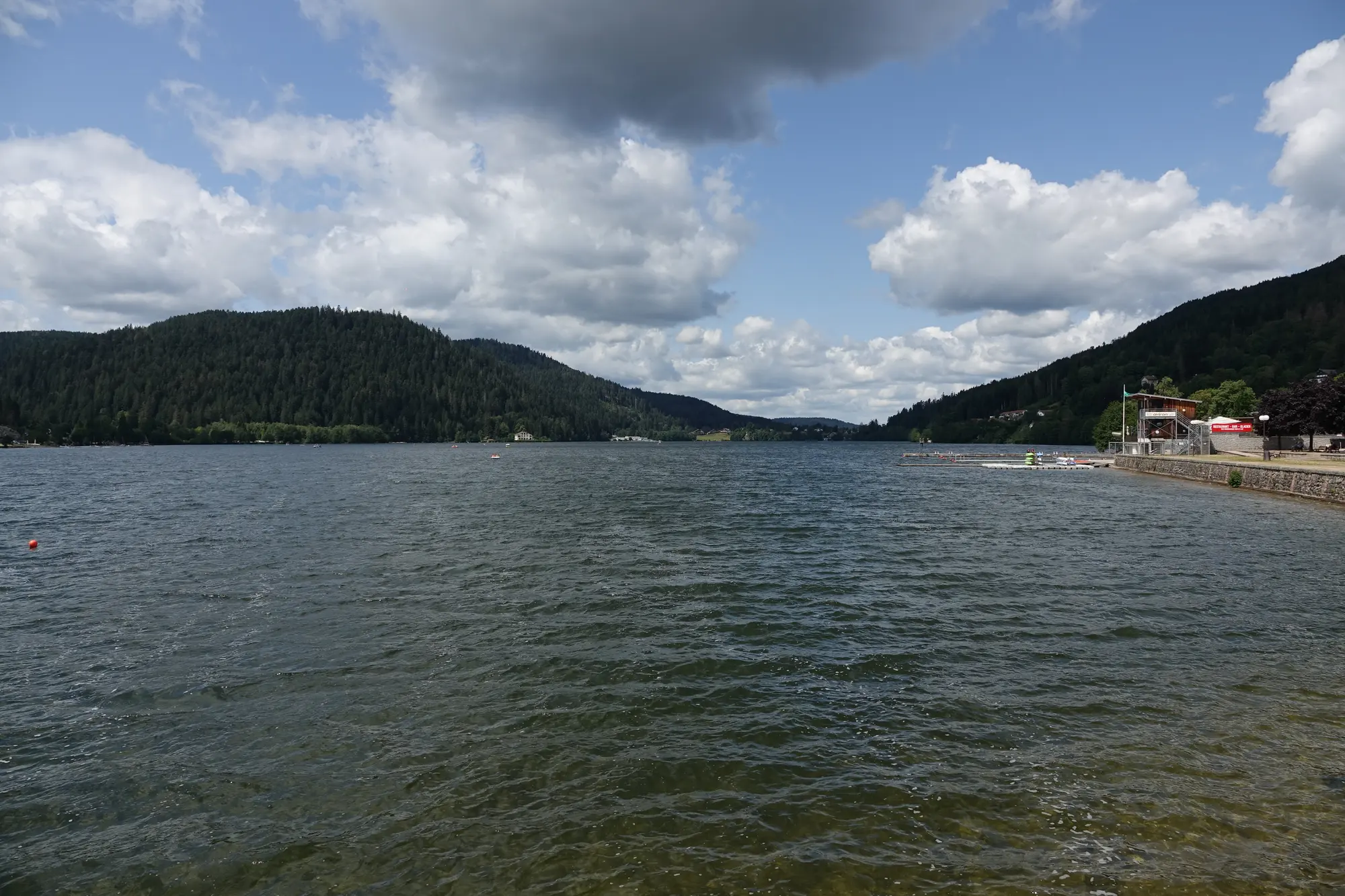
Three beaches line the lake, two of them supervised in July and August. The water reaches 22–24 °C at the height of summer, comfortable for children. The Casino beach, the most central, has loungers and a refreshment stand; Les Bas-Rupts is quieter and better suited to families who want space.
On the water
Pedalos, paddleboards, canoes and rowing boats can be hired by the hour on the north shore. The sailing school offers lessons and hires out dinghies and catamarans. Fishing is permitted with a licence, for trout, perch and pike. An electric boat also makes a commentated circuit of the lake in about thirty minutes.
Around the lake
The lakeside path is 6.5 kilometres long and almost entirely flat, accessible to pushchairs. Allow 1 h 15 at a gentle pace, with plenty of benches and picnic areas along the way. It is also rideable by bike, and beautiful in autumn when the beeches turn copper.
The lake in figures
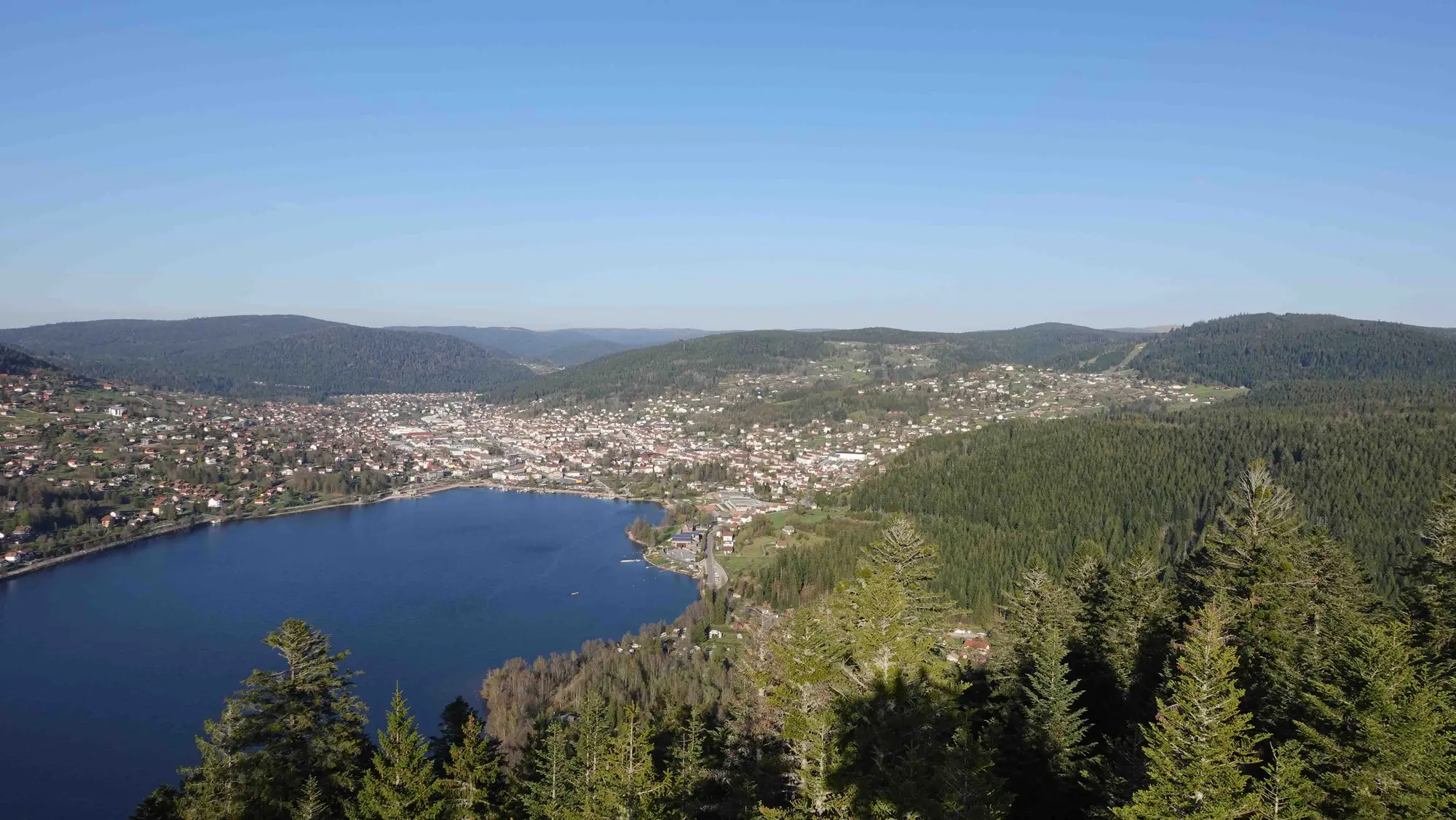
Lake Gérardmer stretches 2,020 metres long by 750 metres wide, covering 115 hectares: it is the largest natural lake in the Vosges. It reaches 38.4 metres deep and lies at 660 metres above sea level. Its elongated east-west shape is no accident — it fills a basin carved by the Vologne glacier during the Würm glaciation, between 80,000 and 10,000 years ago. Four streams feed it, the Phény, the Mérelle, the Chêne and the Cheny, while the Jamagne drains it towards the Vologne.
Which season to choose
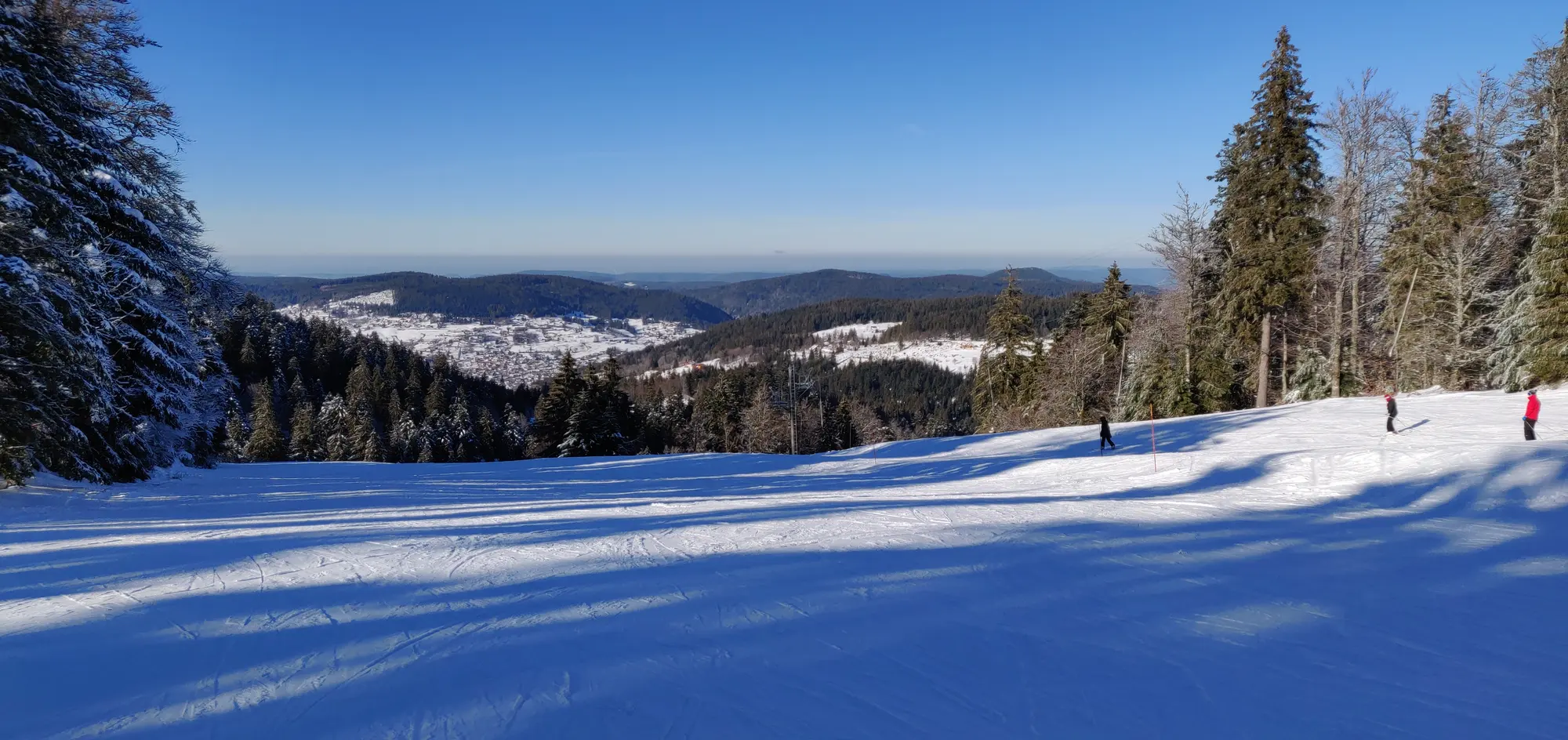
Summer is the season for swimming and pedalos, with water at 22-24 °C and supervised beaches in July and August. Spring is quieter and the best time for the walk round the lake: daffodils cover the meadows and visitor numbers stay low. Autumn brings the finest colours and low, raking light across the water, ideal for photography. In winter the lake freezes at the surface some years; the circuit remains walkable, and the town, emptied of its summer crowds, returns to the rhythm of a ski resort.